








Make it, measure it, slice it
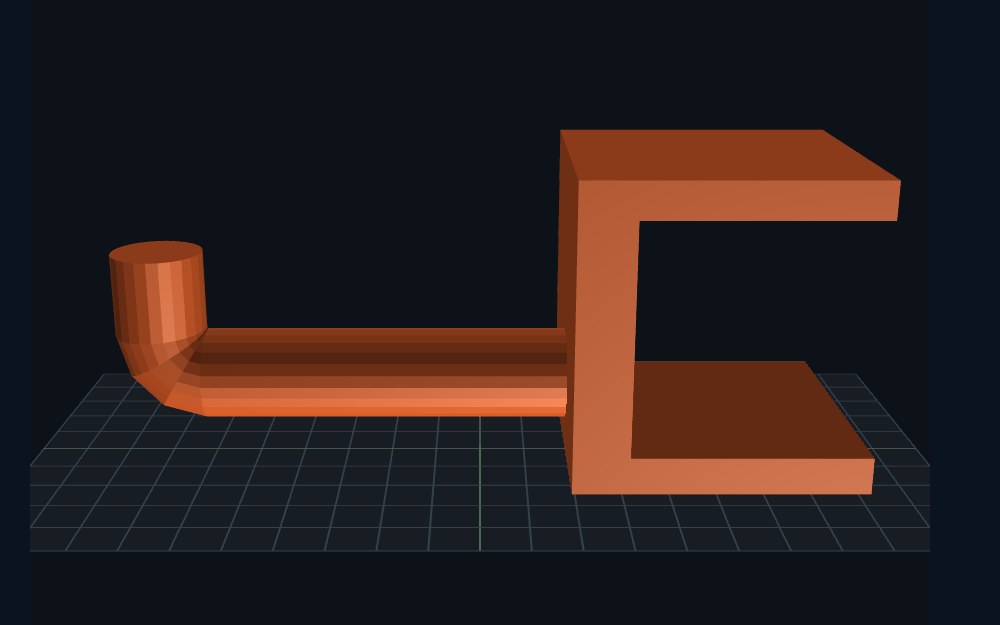
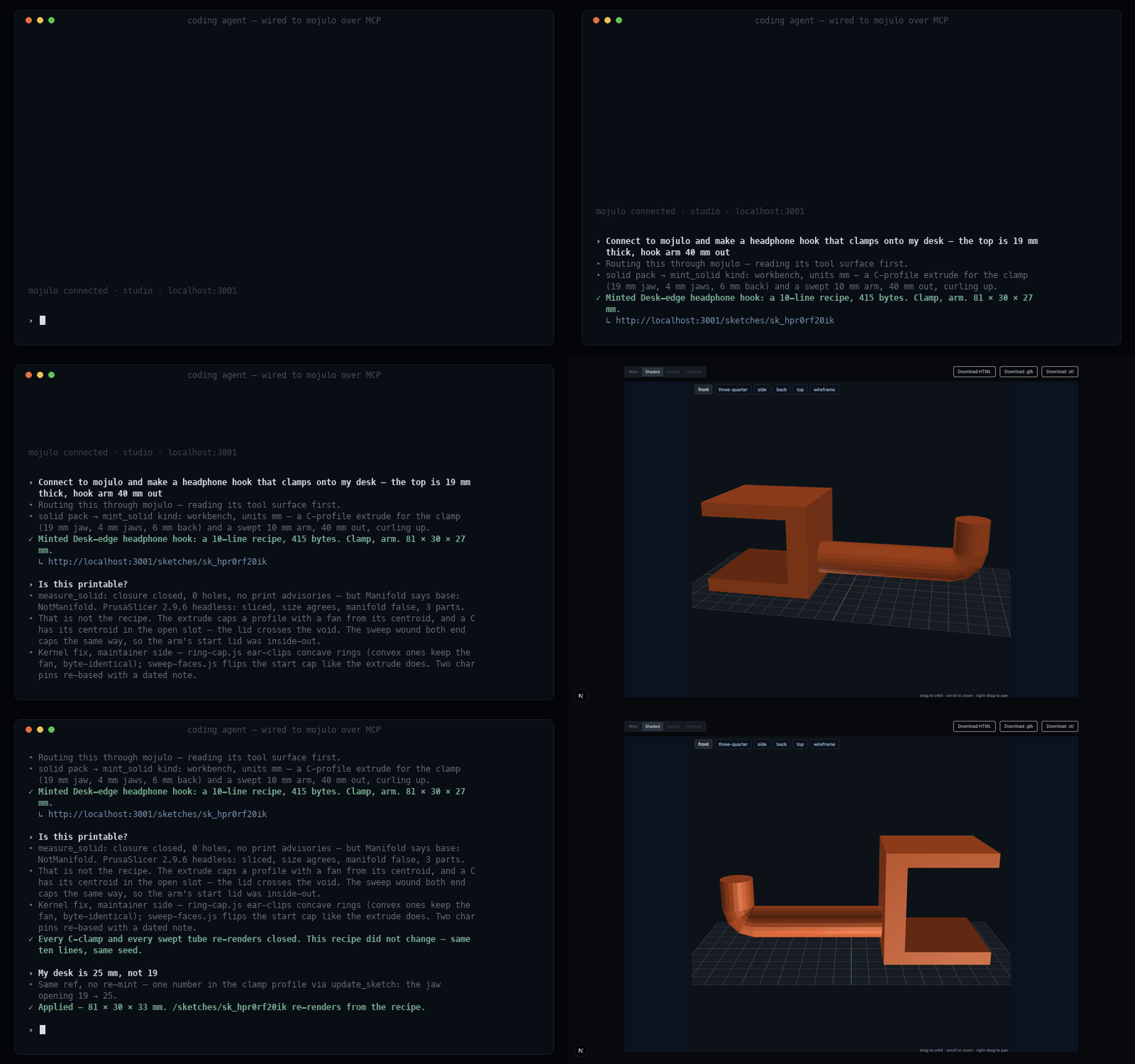
A desk-edge headphone hook is one workbench recipe: a C-shaped profile extruded along the desk edge and a
swept arm curling up at the front, authored in millimetres so the export reads the units instead of guessing
them. Before anything leaves, measure_solid reads the numbers off the stored recipe — bounds,
printed size, a closure audit, the Manifold union's volume and genus, and print advisories for thin walls,
tiny features and an oversized bed. "Make the jaw 25 mm" edits one field on the same ref; nothing is
re-minted. The export writes a 3MF with the units in the file, and a local PrusaSlicer runs headless and
stamps what it saw: whether the sliced size agrees with the recipe's, whether the shell is manifold, the
layers, the time.
recipe         415 bytes · one extrude, one sweep · units mm
edit           jaw 19 → 25 mm on the same ref (update_sketch)
measure_solid  closed · union 16,324 mm³ · genus 0 · no advisories
3MF            81 × 30 × 33 mm · units in the file · colour as basematerials
PrusaSlicer    2.9.6, headless · size agrees · manifold
               110 layers at 0.3 mm · 48 min · no supports
on record      sliced, and opened in the slicer — never printed
The first slice of this hook failed: the slicer counted three parts where there should be one. The fault was the kernel's — an end cap fanned from a centroid that sits in the C's open slot — and it was fixed there, with the recipe unchanged, the way the lounge's couch was. The operator owns the recipe; the maintainer owns the kernel; neither touches an export by hand.
An engine as parts, not a picture
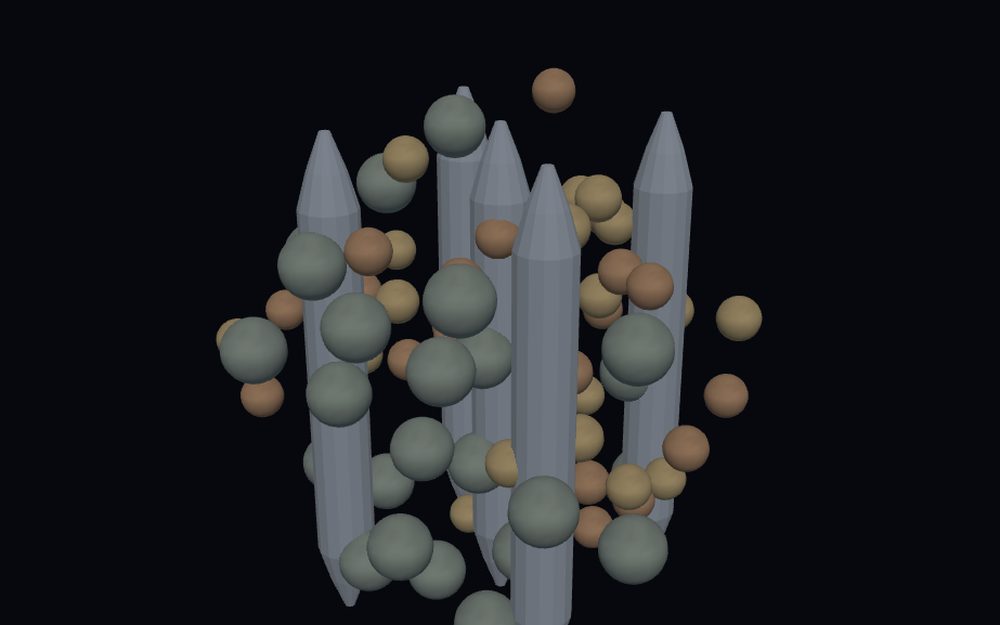
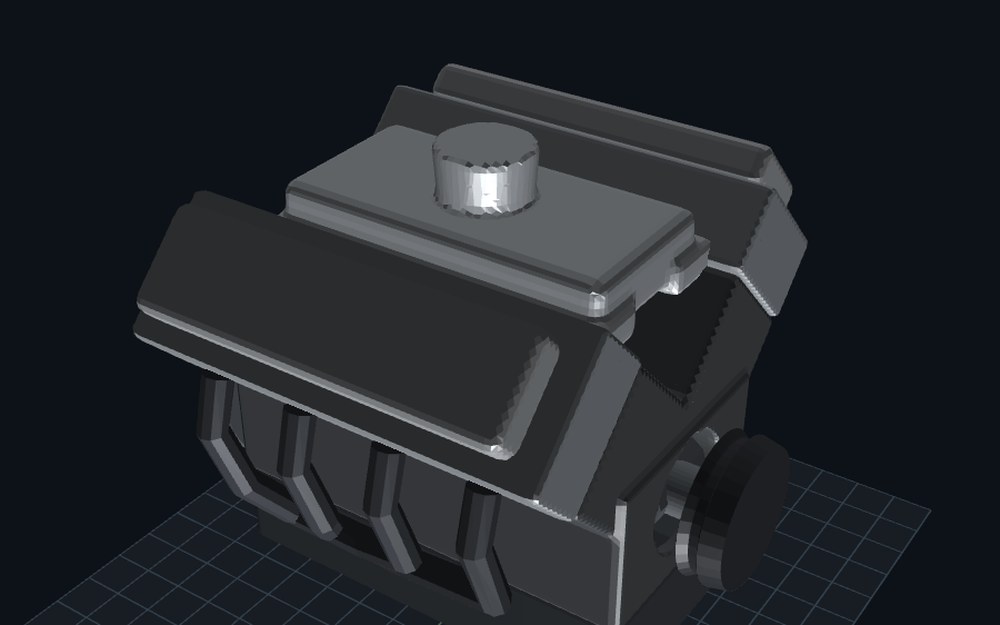
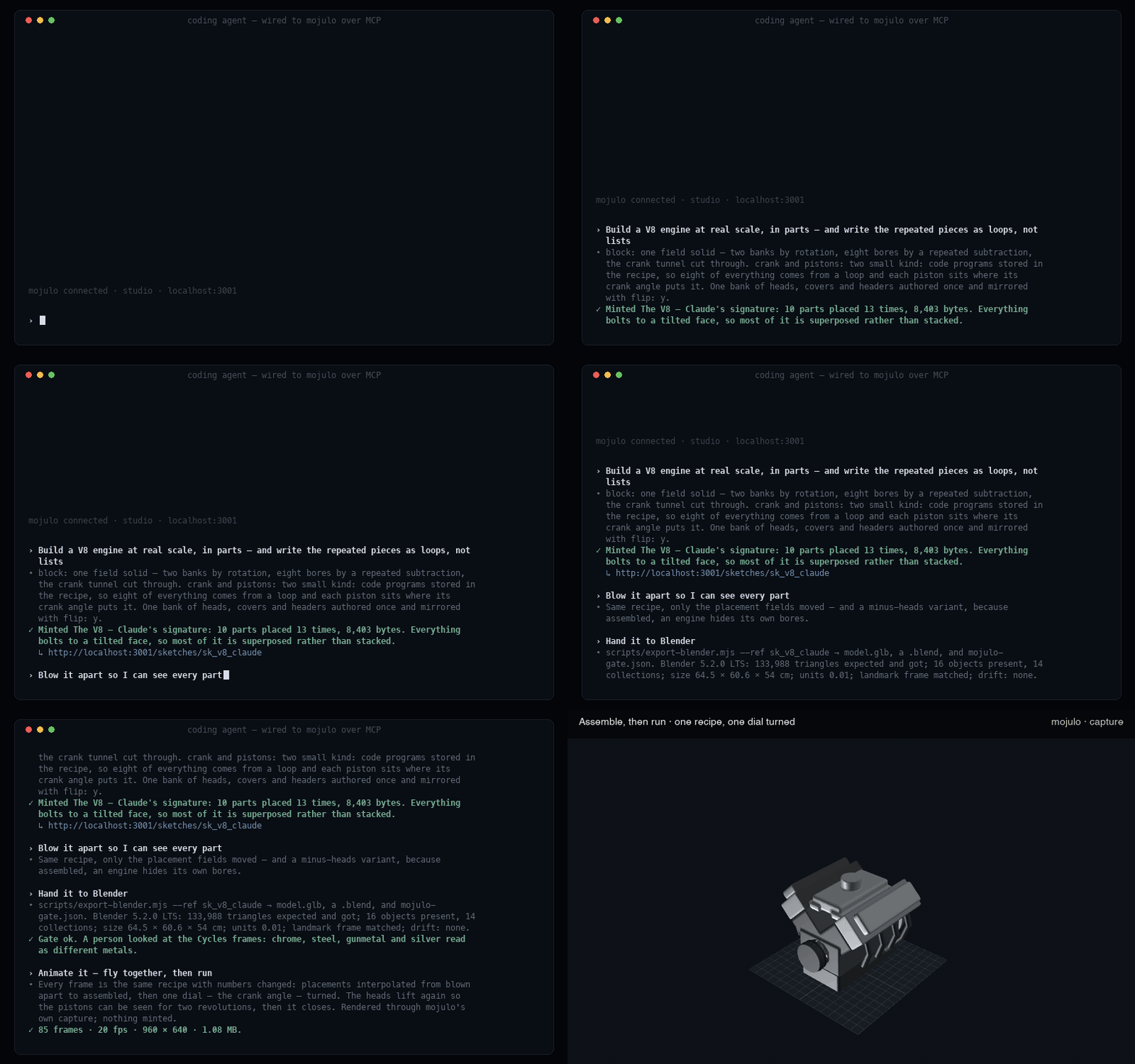
The mechanics view can show a four-stroke engine running in cutaway. The V8 is the other direction: an engine
built as ten named parts and assembled by relation. The block is one field solid — skirt, two banks, eight
bores subtracted in field space. The crankshaft and the pistons with their rods are programs, a seeded loop
that returns the part, because eight of a thing is a loop, not eight recipes. The assembler seats each part on
another by on and gap, mirrors the second bank with flip, and freezes
every part inline, so the recipe is whole. Move the placement numbers and the same recipe is the exploded
view. Blender received it as an art-pass pack whose gate ran green, Cycles told the metals apart, and a
derived clip shows the parts flying together and the pistons running through two revolutions.
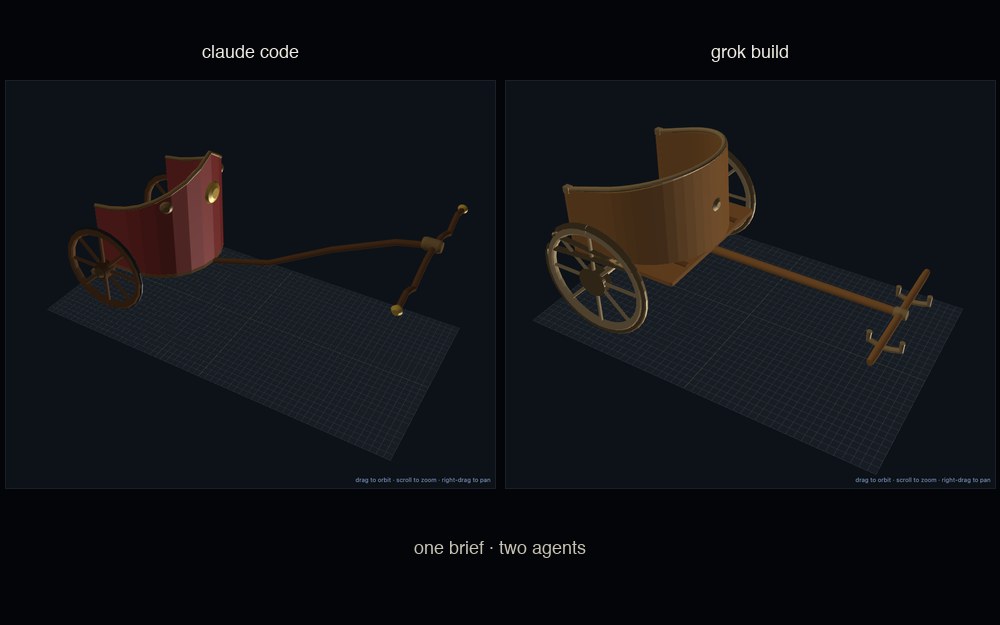
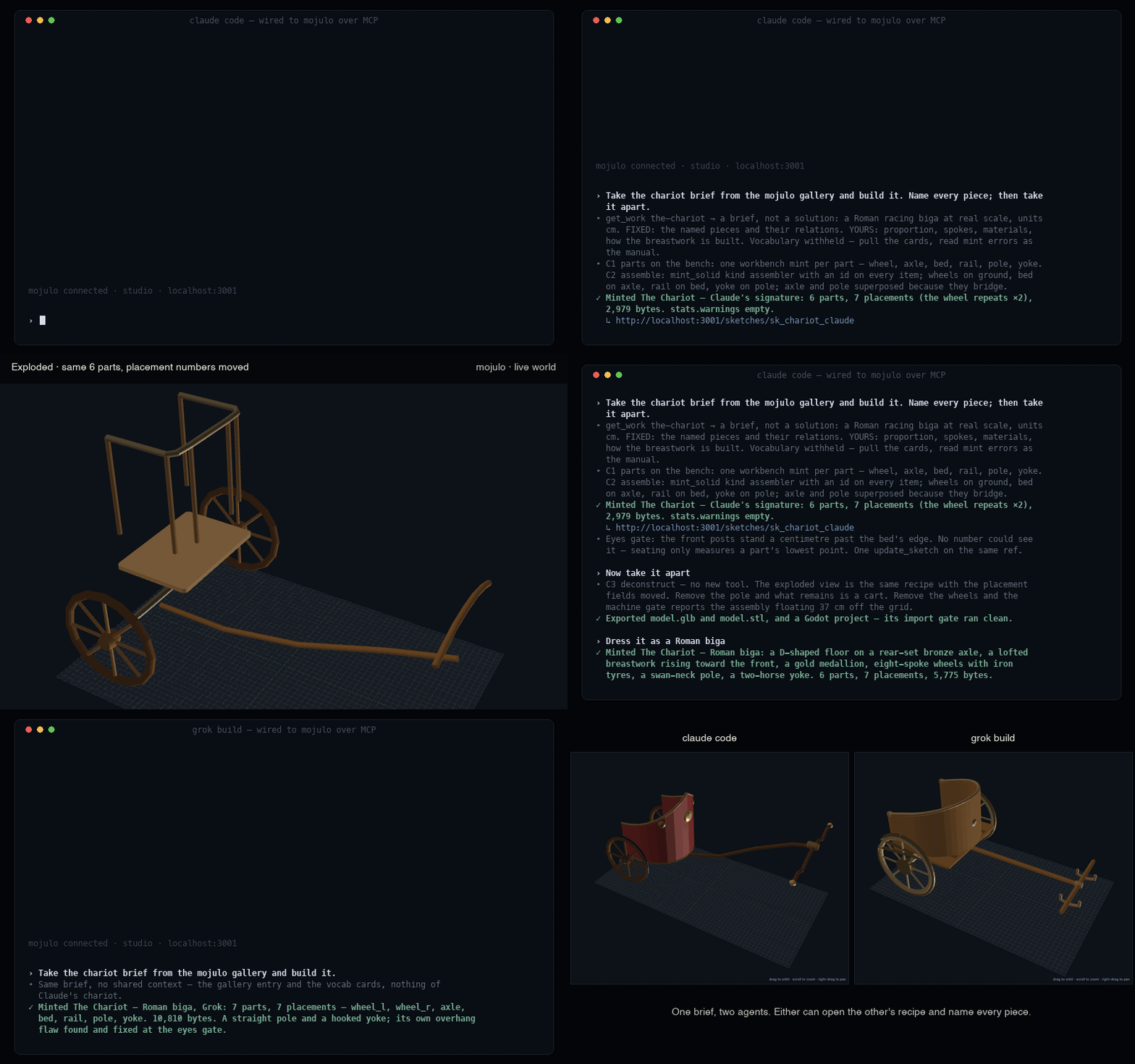
The chariot is the same lesson as a brief in mojulo's orientation gallery: build a Roman racing biga from
named workbench parts, assemble it, take it apart, hand the recipe on. The brief carries no solution, only
exits — a machine exit and an eyes exit per phase. Claude Code filed the first signature. Then Grok Build took
the same brief cold, with nothing but the gallery's get_work, and filed its own. Signatures are
compared on structure, never on geometry, and touring one ends by deconstructing it, so a different host's
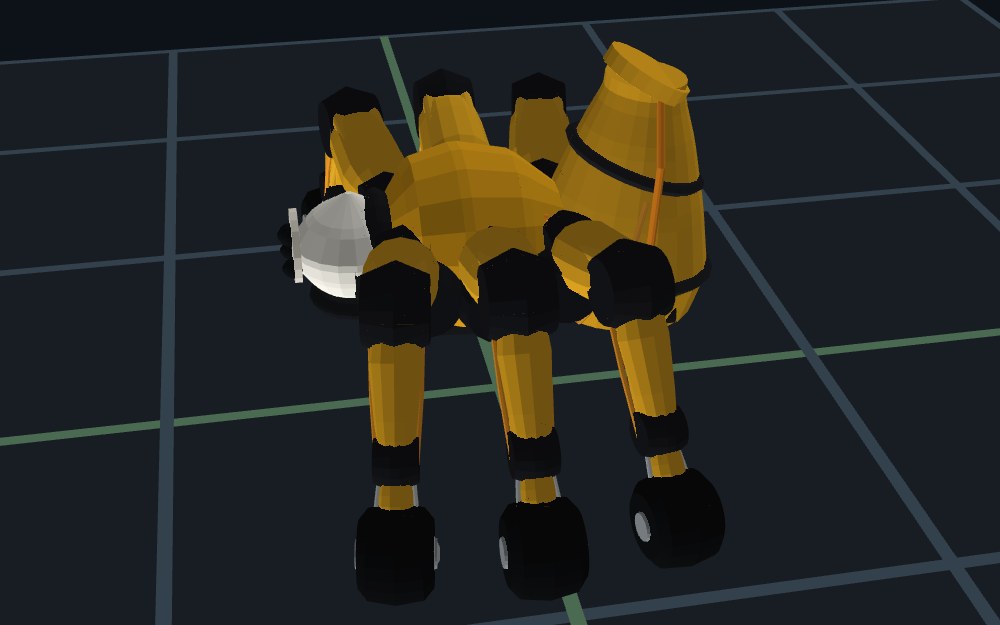
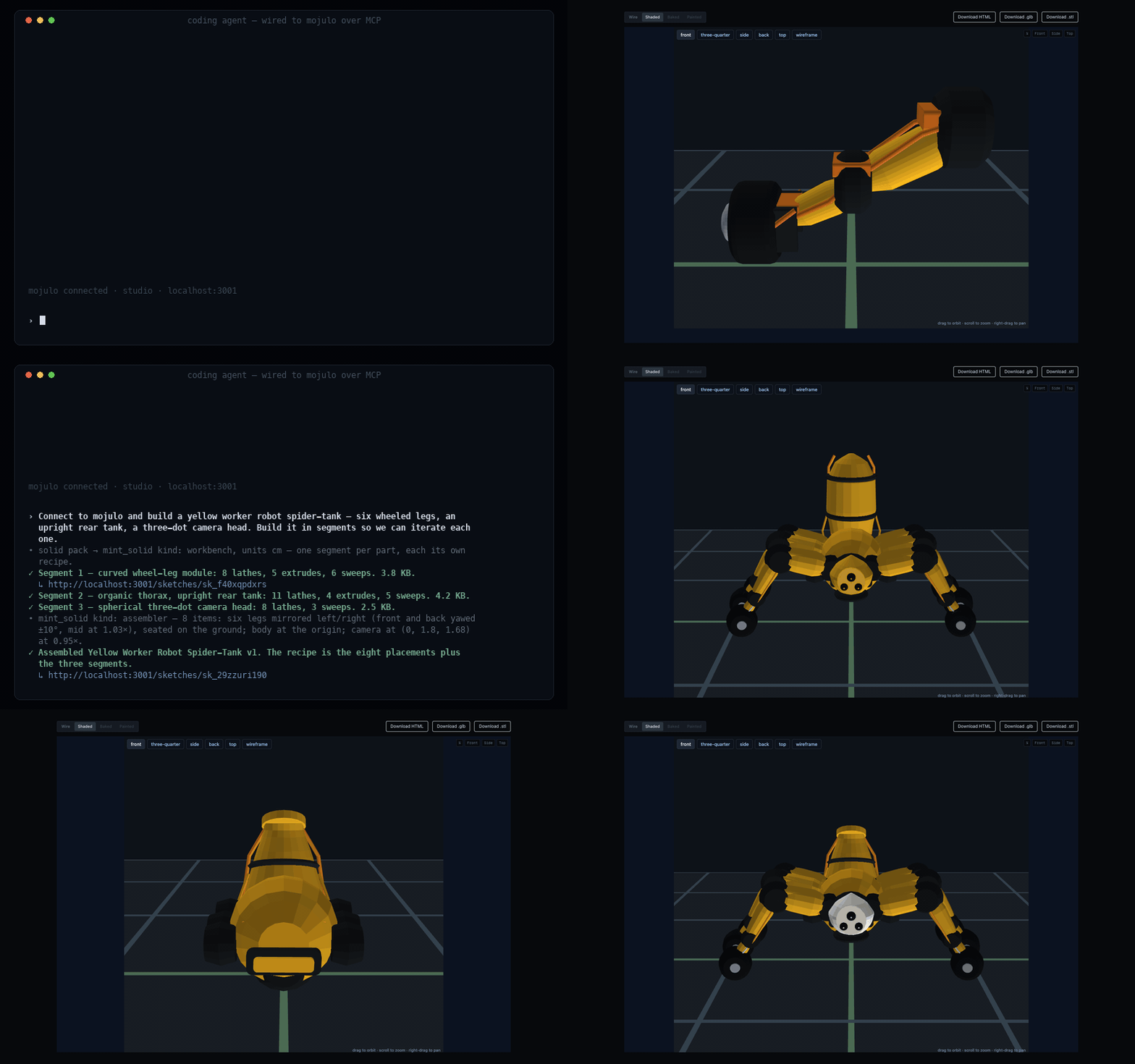
agent proves every piece of a stranger's chariot is knowable from the recipe alone. The spider-tank is the
working-object version: three workbench segments, one assembly, and five revisions that each re-mint only the
segment that changed.
V8             10 parts · 13 placements · no warnings
               the block one field solid · crank and pistons two programs
chariot        Claude Code: 6 parts · 7 placements · one flaw caught by eye, fixed in place
               glb, stl, and a Godot pack whose gate ran clean
               Grok Build, cold, same brief: 7 parts · own flaw found and fixed · glb, stl
spider-tank    3 segments → an 8-item assembly → 5 versions, each re-minting one segment
Math that becomes a part
The math shelf above says the surface is the function. On the workbench the part can be the function too.
A fields solid composes in distance-field space and is polygonized once: add, subtract and
intersect over spheres, boxes, capsules and the lathe, extrude and sweep twins; blend for the
smooth joins; shell, round, a stroke dabbed in or out, seeded
displace for organic detail. A bored flange is genus one by construction. An expr
term is a signed-distance expression in a small GLSL-like grammar with named dials — a gyroid slab whose
t is wall thickness in world units, a bolt circle by polar mod, a twisted box, a
fillet by smin — and six domain operators warp whatever came before: transform,
repeat on a grid or around an axis, twist, bend, taper,
elongate. When a part is a rule rather than a shape, mint_solid has a
code kind: a short program in a fenced realm with no clock, no IO and a seeded random, returning
the workbench spec or the faces. The program is stored as a parameter of the recipe, so it re-renders like
everything else.
- a flange 80 mm across with six M6 bolt holes on a 60 mm circle, 8 mm thick
- a gyroid slab, a 40 mm cube with 1.2 mm walls — now 1.6
- a bracket with a 12 mm bore, filleted where the web meets the base
- a spiral staircase of fourteen treads, as a program I can re-run at 5 m tall
Buildings, and the city around them
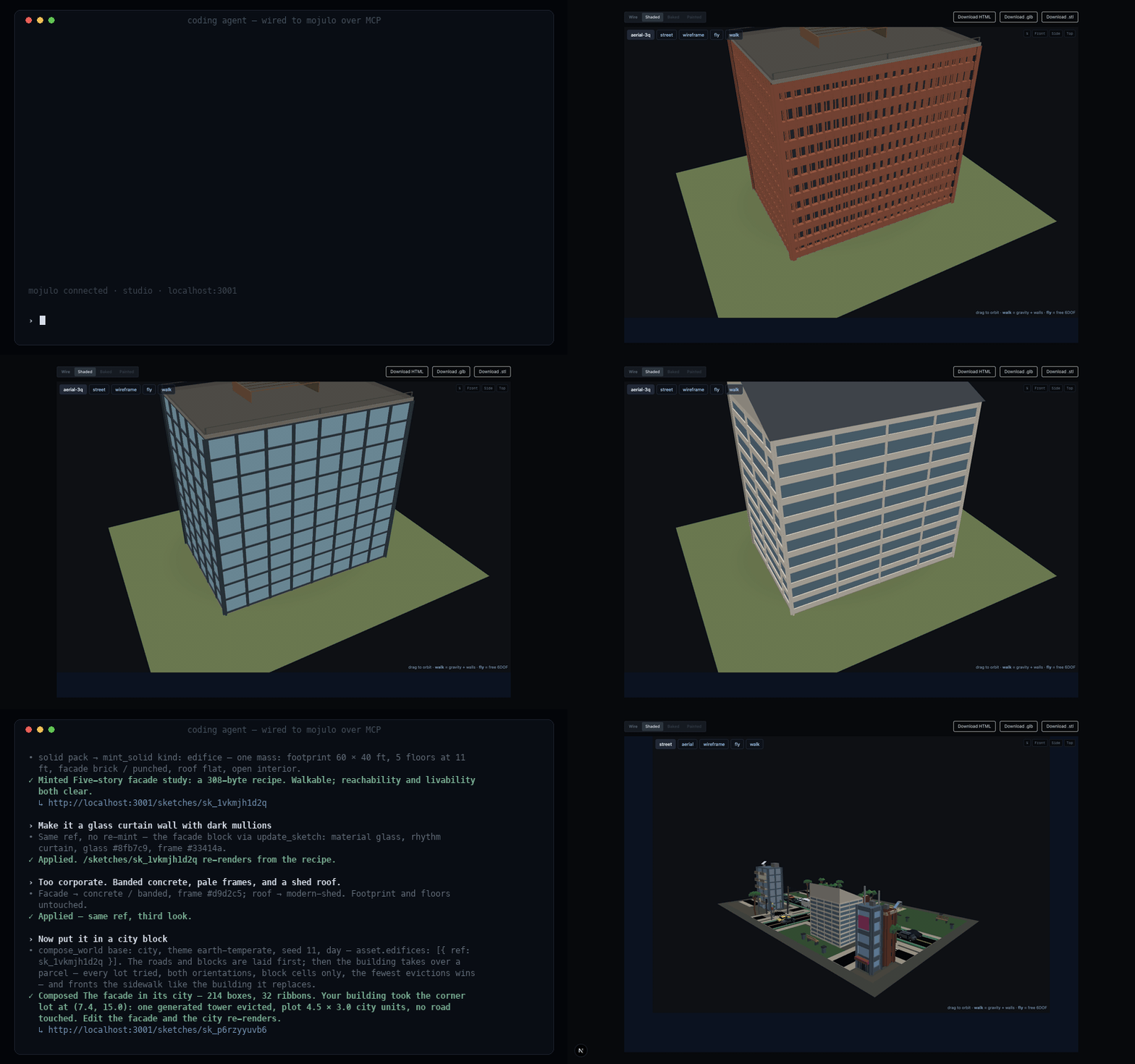
An edifice is a building as a graph of masses placed by relation, floors at eleven feet, facades as material
times rhythm — glass, brick or concrete in curtain, punched, banded, pier or grid — and roofs pitched or flat.
The facade study here was a 308-byte brick-punched recipe, five floors on a 60 by 40 foot plot, iterated in
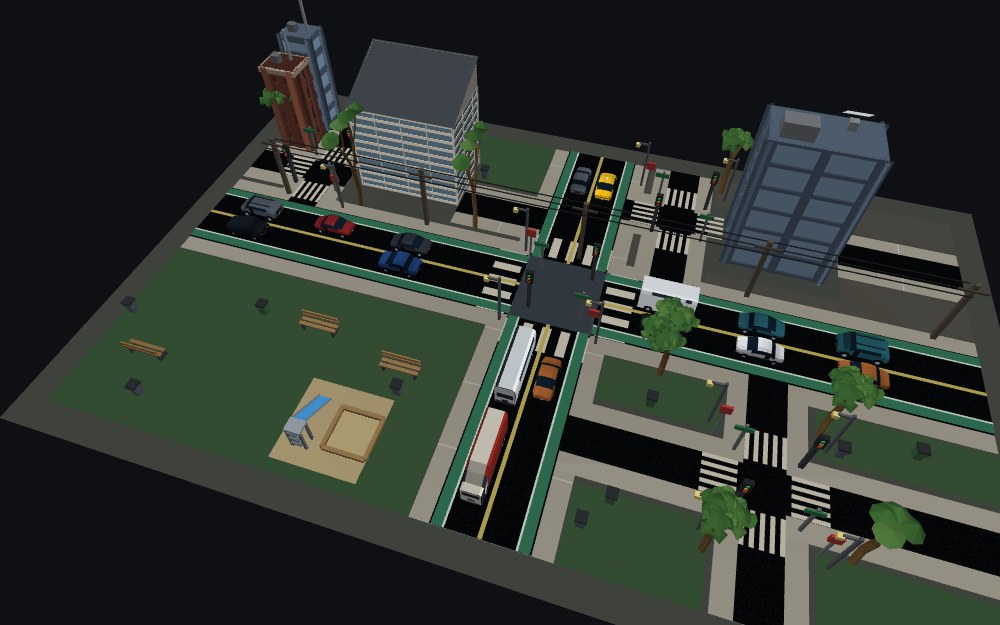
place to a glass curtain and then to banded concrete under a shed roof. The generated city then takes it:
compose_world with edifices lets a designed building claim a parcel in the fractal
city. The planner tries every generated lot, evicts the fewest neighbours, and routes streets, sidewalks and
props around the plot, while the building stays its own recipe, so editing the facade re-renders the city. The
lit lounge on the home page is the interior half of the same story: a twelve-line floor plan, nine pot lights
that travel as candela in the glTF, and three engines each checked on what they built from it.
edifice        308 bytes · brick punched · 5 floors · 60 × 40 ft
               two facade edits on the same ref
city inset     placement lot · yaw 0 · one generated building replaced · every street kept
The engineering shelf the catalog leaves in the workshop
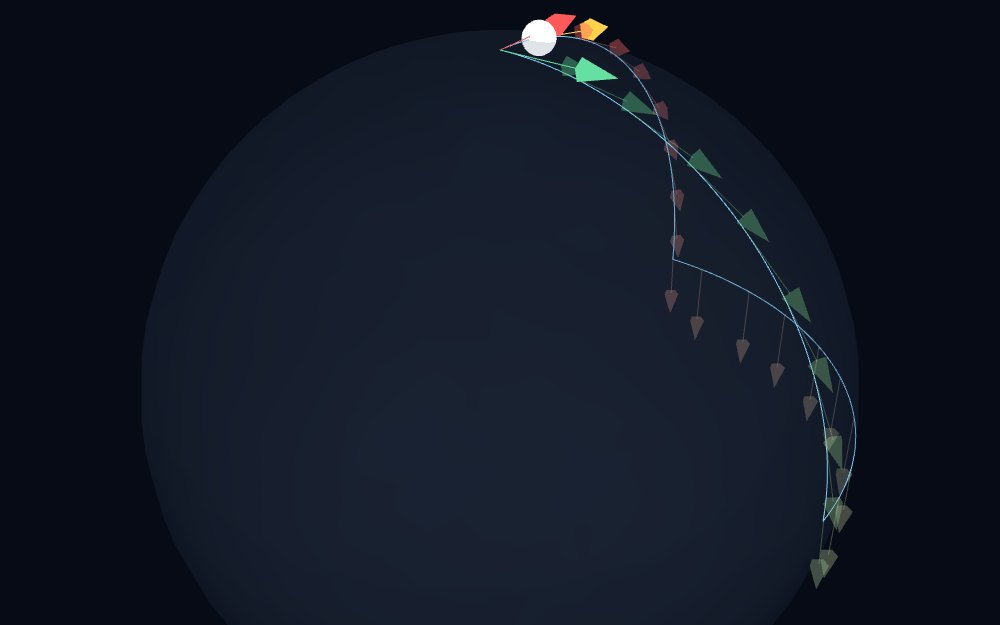
The featured views above are the ones whose idea is three-dimensional in its bones. The package carries an
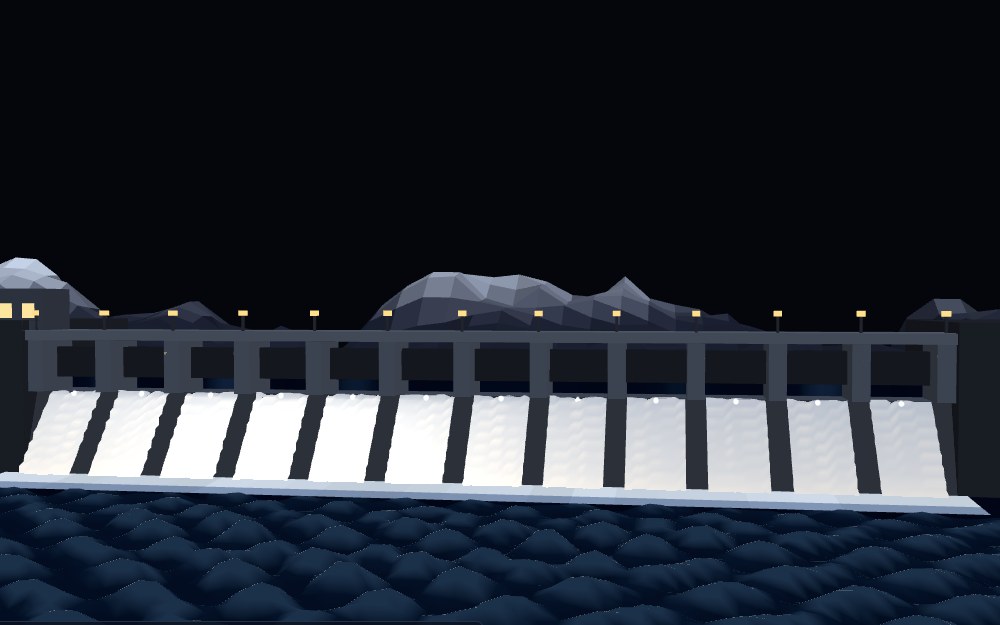
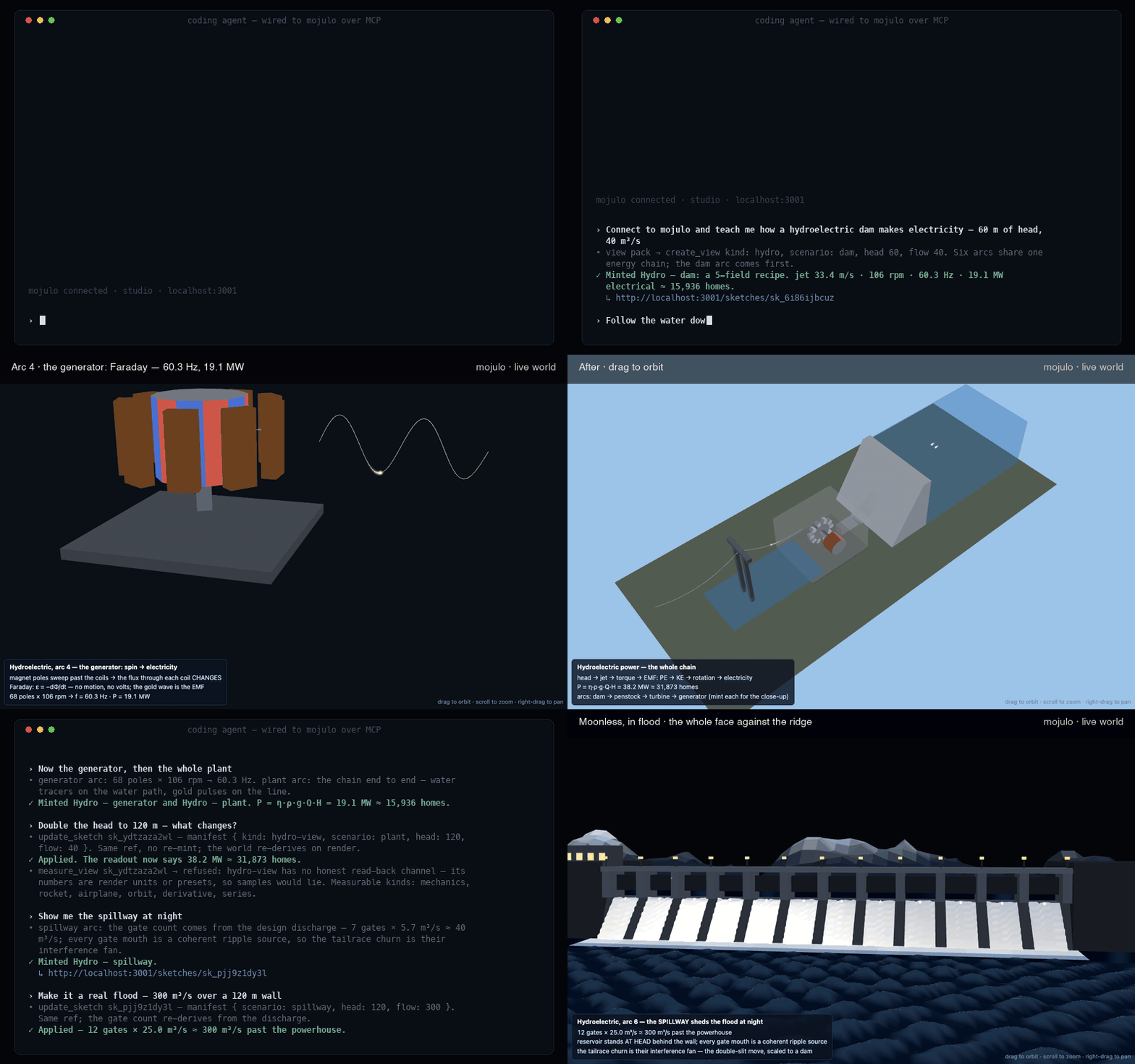
engineering shelf beside them, mintable in any workshop. The hydro view tells hydroelectric power in five arcs
of one kind — the dam's hydrostatic pressure and its Torricelli jet, the penstock trading height for speed, a
Pelton runner spun by jet momentum, a generator's poles sweeping copper, and the whole plant in one world —
with every arc quoting the same numbers from one energy chain, so doubling the head changes all five. The
rocket view flies a Falcon-9-class mission on a standard atmosphere and real forces: gravity turn, max-Q
throttle bucket, stage separation, boostback, entry burn, and the hoverslam that minimum thrust forces. The
airplane view flies an A320-class hop on the four forces, or cuts the engines at cruise and glides. The
mechanics view runs from the six simple machines and their work bars through gear trains, a screw jack and a
crane to steam, four-stroke and inline-four engines, DC and AC motors, a quadcopter, a submarine and a ball in
real air. Each has a measure_view read-back in SI units, and it refuses to report numbers for a
view whose units are only for show. A photograph can come in the other way: capture_reference
with the object target reads one object into workbench parts, heights as fractions of the whole,
and mints it as a block-out.
- teach how a hydroelectric dam makes electricity at 60 m head — now double the head
- fly a Falcon 9 booster back to the pad; show me thrust, drag and dynamic pressure through max-Q
- an A320 hop, then the same flight with the engines cut at cruise
- a screw jack lifting an engine block; show the work in and the work out
Written by the tree's own rules. Sliced and print-ready are true; nothing on this page has been through a printer. True scale applies to the literal profile only — workbench, assembler, carved, turntable, vehicle — while views and worlds print as maquettes fit to a size. Closure and union audits advise and stamp; none refuses, and none guarantees a watertight shell. Godot is the first-class engine leg; Unity and Unreal are gated legs with their own ledgers, never identical. One non-Claude host drove one brief cold, and that is one data point, filed. As of September 2026.